
Is winter a good time for tree removal in Winston-Salem?
Why late fall and winter work well for tree removal in Winston-Salem, what to plan for with Triad weather, and how to get a written estimate.
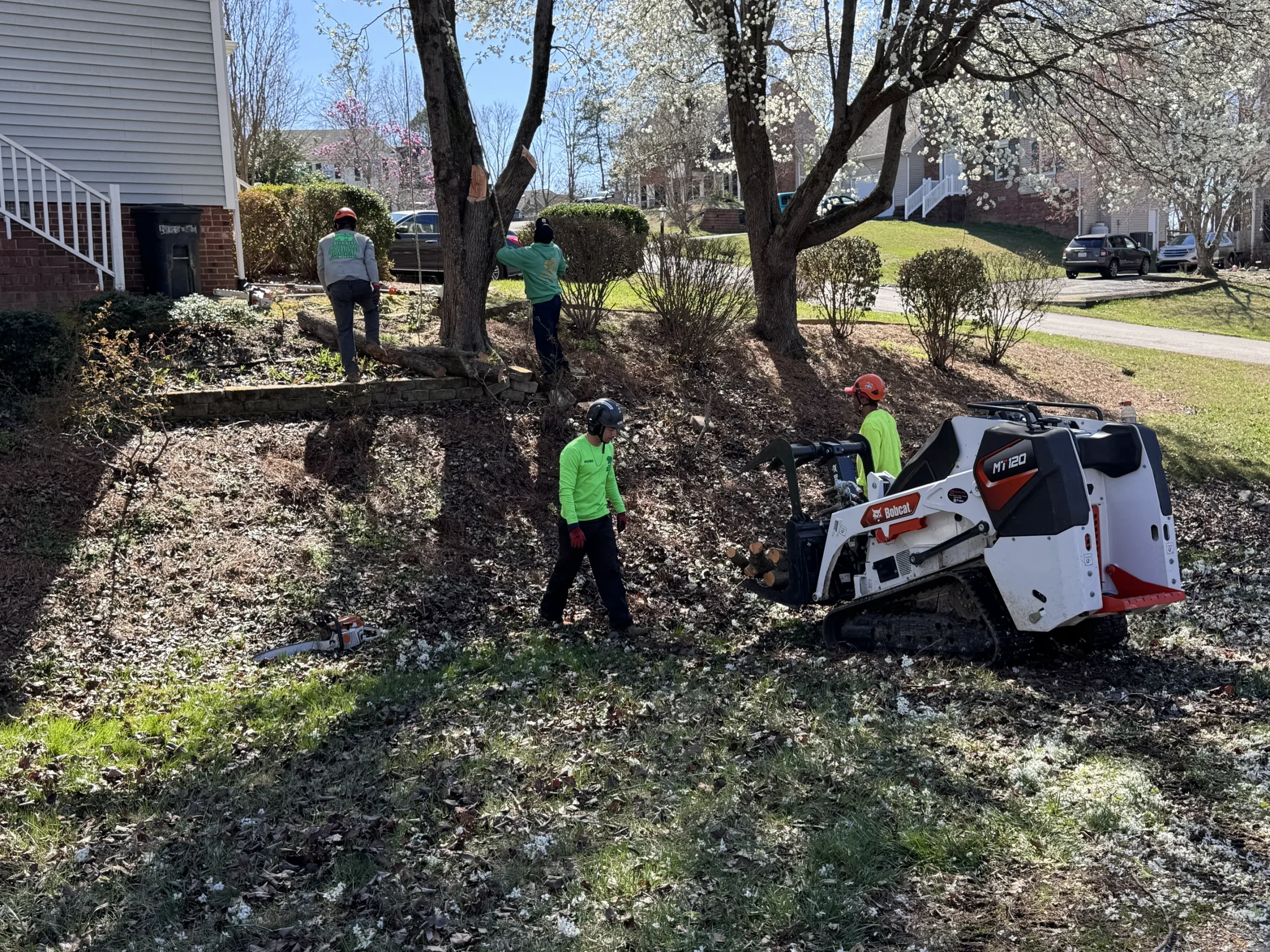
Most homeowners start thinking about a problem tree in spring or summer, when it's full of leaves and hanging over the roof. By the time they call, tree crews are in their busiest stretch of the year. For a lot of removals in Winston-Salem and the rest of the Triad, late fall and winter are a better window.
Here's what changes once the leaves are down, what Triad winter weather means for your yard, and how to plan the job.
Why removals often go easier once the leaves drop
Oaks, poplars, maples and most other hardwoods around Forsyth County are bare from about November into March. That changes a few practical things.
You can see the whole tree
With the canopy gone, the structure is out in the open. Dead limbs, cracks, old wounds, co-dominant trunks and weak unions are easier to spot from the ground and from the bucket. That makes for a more accurate assessment and a more accurate written estimate, with fewer surprises once the crew starts cutting.
Less weight and less debris
A leafless hardwood is lighter than the same tree in July. Each limb that gets rigged and lowered carries less weight, and there's less leafy material to chip and haul away. Near a roof, fence or power line, lighter sections are easier to control.
The plants around it are dormant
Shrubs, perennials and lawn grasses are dormant or close to it. Foot traffic, rigging lines and dropped brush still do some damage, but dormant plants usually recover better than they would mid-season.
What Triad winter weather means for your yard
Winston-Salem winters aren't a deep freeze. The ground freezes for a few days, thaws, and freezes again, and our red clay holds water. That affects a removal more than most people expect.
Frozen or dry ground lets equipment roll over the yard with little trouble. After a few days of rain, red clay turns soft and slick, and heavy equipment can rut a lawn. We watch the forecast and plan around it. That might mean moving the date, laying down ground protection, or keeping the heavier machines on the driveway and moving material by hand for part of the job.
If you have a soft or low spot in the yard, point it out during the estimate. Planning around it is a lot easier than fixing ruts in March.
Ice storms are the bigger winter risk
The Triad gets ice storms more often than heavy snow. Ice adds a lot of weight to limbs, and trees that are already dead, cracked or leaning are the ones most likely to fail under it. A tree that looked fine all summer can end up across the driveway after one night of freezing rain.
If a tree on your property is already showing warning signs, taking it down before the worst of winter is safer than waiting to see if it makes it through. Our page on storm and emergency tree service covers what to do if a tree has already come down or is hung up in another tree.
Signs a tree should come down this winter
An old or unattractive tree doesn't automatically need to go. These are the signs that call for an on-site assessment soon:
- A new lean, or one that's getting worse, toward the house, driveway or another structure
- Cracks in the trunk or large dead sections in the crown
- Fungus, soft wood or hollow spots near the base
- Roots lifting a sidewalk or driveway, or soil heaving on one side of the trunk
- Large dead limbs over the roof, a play area or a parked car
- Damage from an earlier storm that was never cleaned up
You don't have to make the removal decision yourself. That's what the assessment is for. Sometimes pruning out a few problem limbs is enough, and sometimes the tree has to come down.
How a winter removal is planned
The process is the same in January as in June. Winter usually just gives you more flexibility on the date.
Assessment and written estimate
Every job starts with a free on-site assessment. We look at the tree's condition, what's underneath it, how equipment can reach it, and where the wood and brush can go. You get a written estimate broken out in line items, so the removal, stump grinding and debris haul-off are listed separately and you can decide what to include.
Price depends on the tree's size and species, its condition, how close it is to the house or power lines, how easy it is to reach, and how much material has to leave the property. A dead tree can take more care than a healthy one, because dead wood is less predictable when it's cut.
Taking the tree down
Most residential removals in Winston-Salem are done in sections. Near homes and fences, our crew uses rope rigging and controlled cutting to bring the tree down piece by piece. Larger oaks, pines and poplars may need aerial lift access or crane support, depending on the site. Tight backyards and trees over roofs are common in the older neighborhoods around the city, so we choose the method for each property.
Wood, brush and cleanup
You decide what happens to the wood. We can cut it to fireplace length and leave it where you want it, leave larger logs in a set spot, or chip the brush and haul everything away. We agree on the cleanup before work starts.
If you plan to burn the wood, keep in mind that fresh-cut wood needs time to dry. Most firewood needs at least six months to season, and dense hardwoods like oak usually take longer. Wood from a tree removed in December is generally firewood for next winter.
Don't forget the stump
Removing the tree and grinding the stump are two separate parts of the job. A stump left behind can sprout, trip someone, or get in the way of mowing and replanting.
Winter is a fine time to have it ground. We grind stumps below grade and clean up the area so you can decide what goes there next, whether that's grass, a garden bed or a new tree in spring. If you want it done with the removal, ask for it on the estimate. Our stump grinding service page explains the process.
Permits and HOA rules
Most tree removals on private residential property in Winston-Salem don't need a city permit. The city's Urban Forestry program regulates trees on public property and in the right-of-way, which can include the strip between the sidewalk and the street. If your tree may fall into one of those exceptions, we'll flag it during the estimate.
In an HOA neighborhood, check whether the board needs to approve tree work. Many ask for the contractor's certificate of insurance. Green Bear Tree Service is fully insured, and we provide a COI on request so you can hand it to your board.
Coordinating with neighbors
If neighbors on your street also have trees that need work, ask about it when you call. When jobs can be done the same day, it can often cut down on equipment mobilization costs. Winter is a good time to have that conversation, especially about trees along a shared property line.
Planning your removal
If a tree has been worrying you, late fall and winter give you time to deal with it before spring storms and the busy season. Green Bear Tree Service has worked across Winston-Salem, Kernersville and the Piedmont Triad since 2022. We're also a supporter of One Tree Planted: One Tree Donated for Every Job Completed.
To set up a free assessment, call our team at (336) 491-2132 or request an estimate through our tree removal in Winston-Salem page. If you're closer to our home base, see our page for tree service in Kernersville.