
How often should trees be trimmed? A Triad homeowner's guide
How often trees need trimming depends on age, species and where they stand. A practical schedule for Winston-Salem, Kernersville and Triad yards.
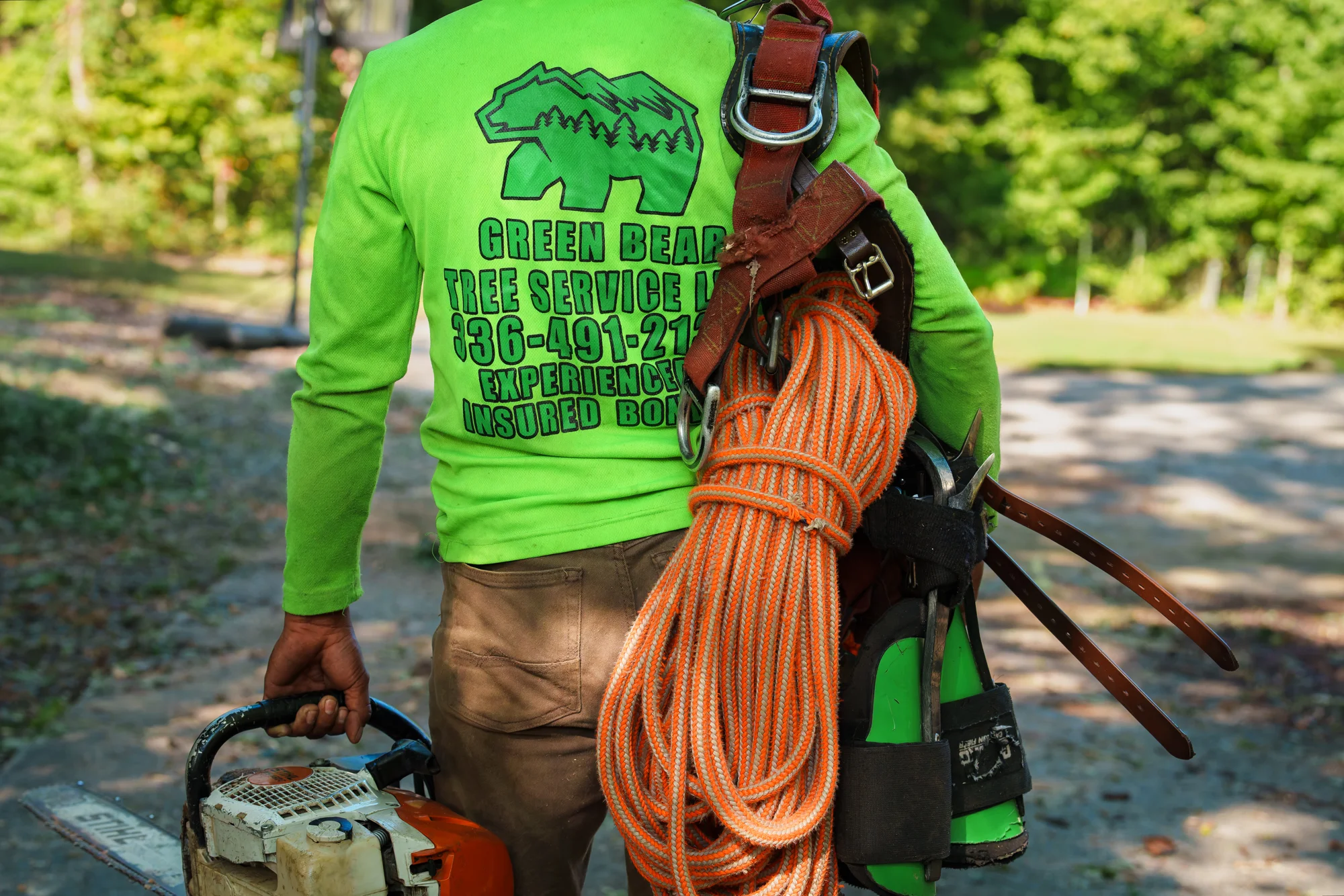
Homeowners around Winston-Salem and Kernersville ask us for a number all the time. Every three years, every five years, something to put on the calendar and forget about.
There isn't a single number that fits every tree. A young maple in a front yard needs different care than a 60-year-old oak that was standing before the subdivision went in. A tree crowding a power line needs more attention than one standing alone in a back field. Species, age and location all change the answer, and two trees planted the same spring can need very different care ten years later.
What we can give you is a working schedule built on those factors, plus the cases where the schedule doesn't apply at all.
A rough schedule by tree age
Young trees
For trees planted in the last 10 years or so, plan on a light structural trim every one to three years. This is when a tree decides what shape it will be. Left alone, a young tree often grows two competing leaders instead of one, or puts out low branches that will be in the way for decades. Small cuts now steer the structure while the wood is thin and the wounds close fast.
Mature trees in good shape
Every three to five years is typical. The structure is already set, so the work is maintenance: removing deadwood, balancing weight, and taking back limbs that rub the roof or hang over the driveway.
Older or declining trees
These need a look more often, even if they don't need cuts every year. Deadwood builds up faster, and a tree that has lost vigor doesn't recover from storm damage as well as it used to.
Newly planted trees are their own case. For the first year or two after planting, we leave them mostly alone. The tree needs its leaves to build roots and settle into the site. Corrective pruning starts once it's established.
The reason to start early comes down to wound size. A big cut on a big tree leaves a big wound that takes years to close and gives decay a way in. A small correction on a young tree costs it very little.
Where the tree stands changes the schedule
A tree's surroundings matter as much as its age. These situations call for more frequent trimming than the rough schedule above:
- Branches over the roof, gutters or chimney
- Limbs near service drops or utility lines (anything touching a power line is a job for the utility or a qualified line-clearance crew, never a homeowner)
- Trees that shade a driveway or walkway, where low limbs get hit by vehicles or block sight lines
- Fast-growing species planted close to the house
A tree standing in an open yard with nothing under it can go longer between visits. Same species, same age, different schedule.
Timing matters as much as frequency
When you cut makes a difference. Most deciduous trees do best pruned in late fall and winter while they're dormant. With the leaves off, we can see the full branch structure, and the tree isn't trying to heal cuts while it pushes new growth. We covered the cold-season side of this in our post on cold weather tree care and what can wait until spring.
A few species are exceptions. Maples, birches, elms and dogwoods bleed sap heavily when cut in late winter or early spring. It rarely hurts the tree, but it's messy, so we often schedule those for summer.
Spring-flowering trees run on a different clock too. Redbuds, cherries, crabapples and dogwoods set next year's flower buds the summer before. Prune them in winter and you cut off the spring bloom. The better window is right after they finish flowering.
So a maple and a redbud ten feet apart in the same yard can need work at different times of year. Once you know what's growing on your property, the calendar gets simple.
Dead, damaged and diseased wood can't wait
Everything above has one big exception. Dead, broken or diseased wood comes off when you find it, whatever the month.
A dead limb won't get stronger, and it won't wait for a convenient season before it drops on a car or a fence. A branch cracked in a storm and hanging by a strip of bark is a hazard the day it cracks. Some fungal and bacterial problems also move through a tree quickly and can spread to nearby trees of the same species, so waiting for the ideal pruning window can cost more than the one limb.
We take hazard limbs off roofs in July and off driveways in January. If a branch is a safety risk or clearly dying, it comes down. The shaping and growth control can follow the normal schedule.
Signs a tree is due before its next scheduled trim
You don't need to wait for a set interval if the tree is telling you something. These are the common signs:
- Branches that cross and rub against each other
- Dead limbs, or a section of canopy with no leaves while the rest is full
- Cracks, splits or loose bark on the trunk or major limbs
- A canopy so dense you can't see light through it
- New lean, or a tree that leans more than it did last year
- Limbs growing toward the house, the roof or the power line
- Fungus or mushrooms growing on the trunk or at the base
Any one of these is a reason for a closer look. Several together usually mean the tree is overdue.
An annual walkaround keeps you ahead of it
The closest thing to a simple rule is this: walk your property once a year and look at every tree.
Late winter is a good time, before leaves fill in and hide problems. Walk slowly. Look up into the canopy instead of just at the trunk, and check each item on the list above. Most years you'll find nothing urgent. Some years you'll find one limb hanging low over the roof, or one branch with no buds while the rest of the tree is fine.
The walkaround catches small problems while they're cheap. A limb you could take off with a pole saw this year can turn into a bucket-truck job in two or three years if it keeps growing over the house. Do it at the same time each year so you have something to compare against.
Triad weather moves the dates
A spring walkaround can't predict what a summer thunderstorm will do. Severe storms roll through Forsyth and Guilford counties every year, and winter ice storms load branches with weight they were never built to carry. Our humid summers also give fungal problems a head start.
None of that follows a pruning calendar. A tree that looked healthy in March can need attention by August because of one storm. The rule from earlier still holds: storm-damaged wood comes off when you find it. If a storm has already put a limb on your roof or a tree across the drive, that's a job for our emergency storm damage response, and the regular schedule picks back up afterward.
Treat your trimming schedule as a baseline, and expect the weather to adjust it.
When trimming isn't the answer
Sometimes a walkaround turns up a tree that trimming won't fix: a split trunk, heavy decay at the base, or a tree leaning toward the house with its roots lifting. Cutting off limbs won't make that tree safe. In those cases we'll tell you plainly, and tree removal may be the safer call. Most trees we look at only need routine pruning, and we would rather keep a healthy tree standing.
Getting your trees on a schedule
Green Bear Tree Service is based in Kernersville and works across Winston-Salem, Greensboro and the rest of the Triad. Our crew handles tree trimming and pruning for young trees that need structure and mature trees that need maintenance, and we're fully insured on every job.
If you're not sure how long it's been since your trees were last trimmed, or what they need this year, request an estimate. We'll walk the property, tell you what needs work now and what can wait, and give you a written quote.